
Gauss’s Handwritten Notebooks
80€
Description
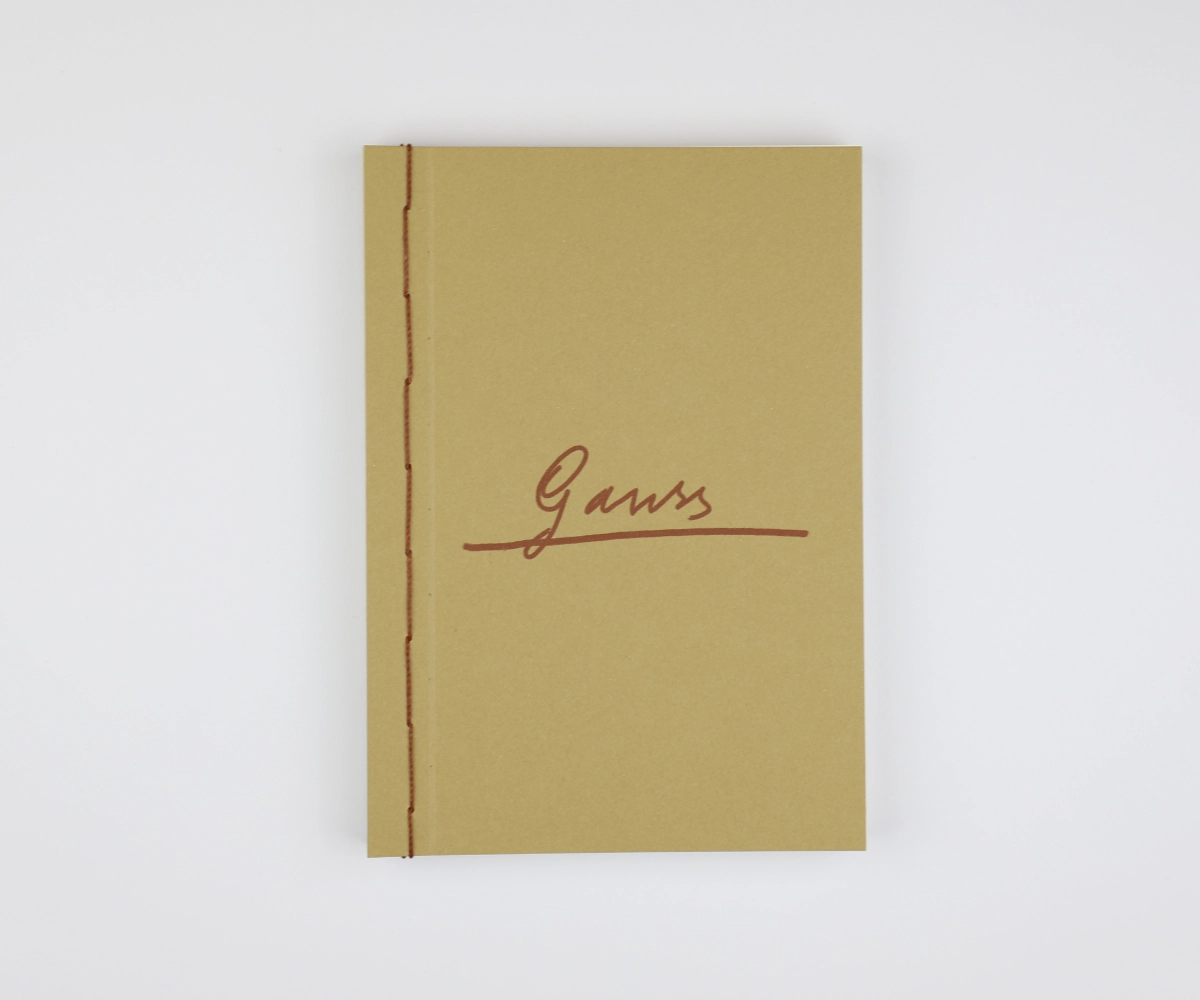
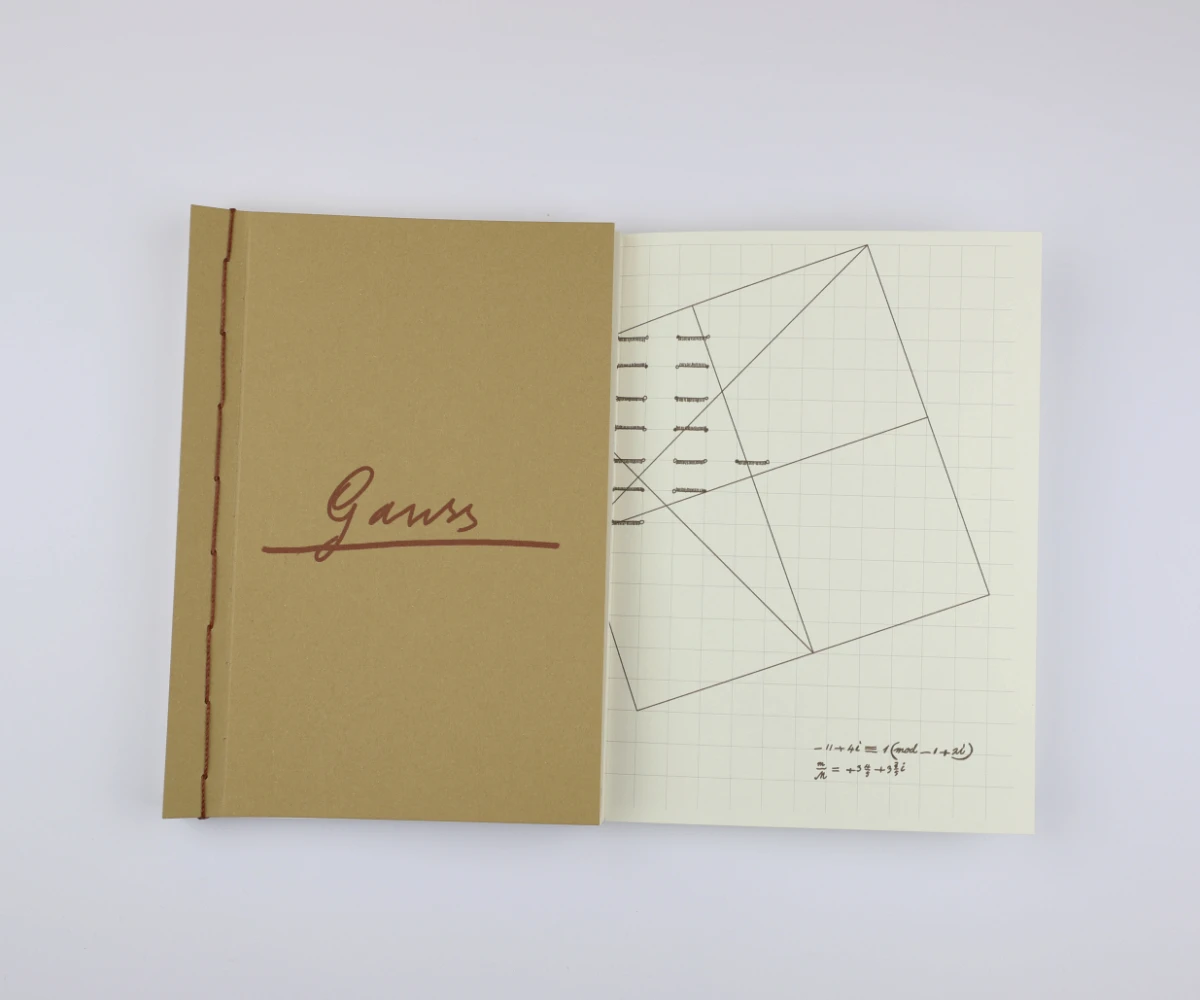
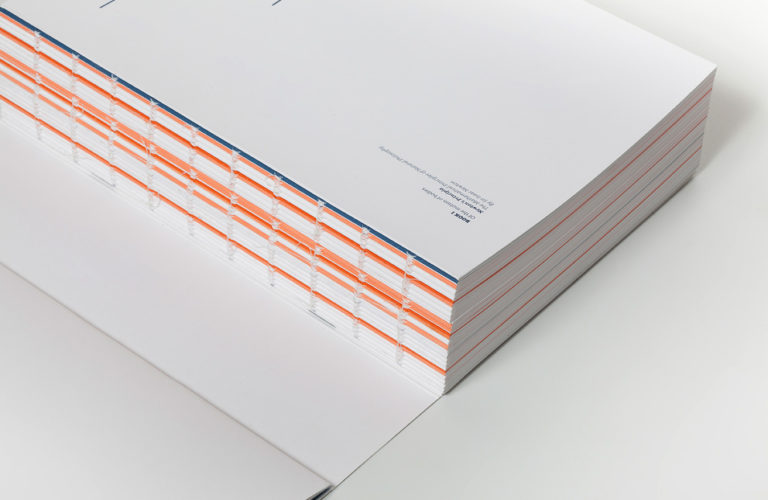
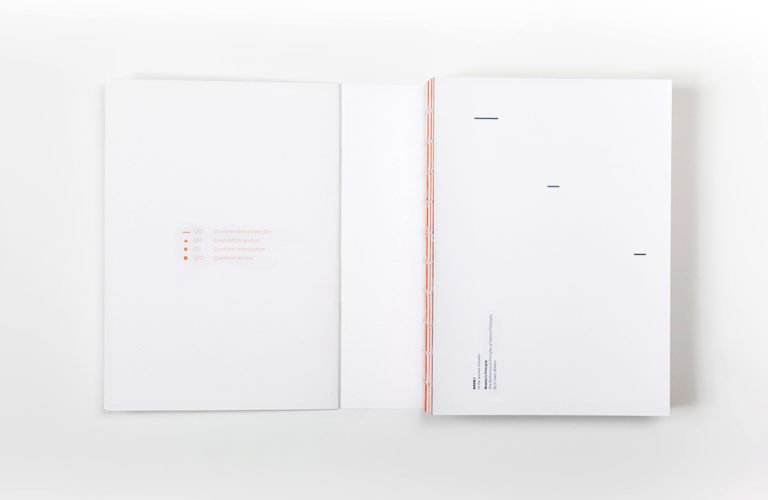
This is a handcrafted, made-to-order book. Each copy is individually printed, hand-bound with Japanese stab binding. Because every book is made by hand in our workshop, please allow a few weeks for production before shipping.
Inside the Mind of the Prince of Mathematicians
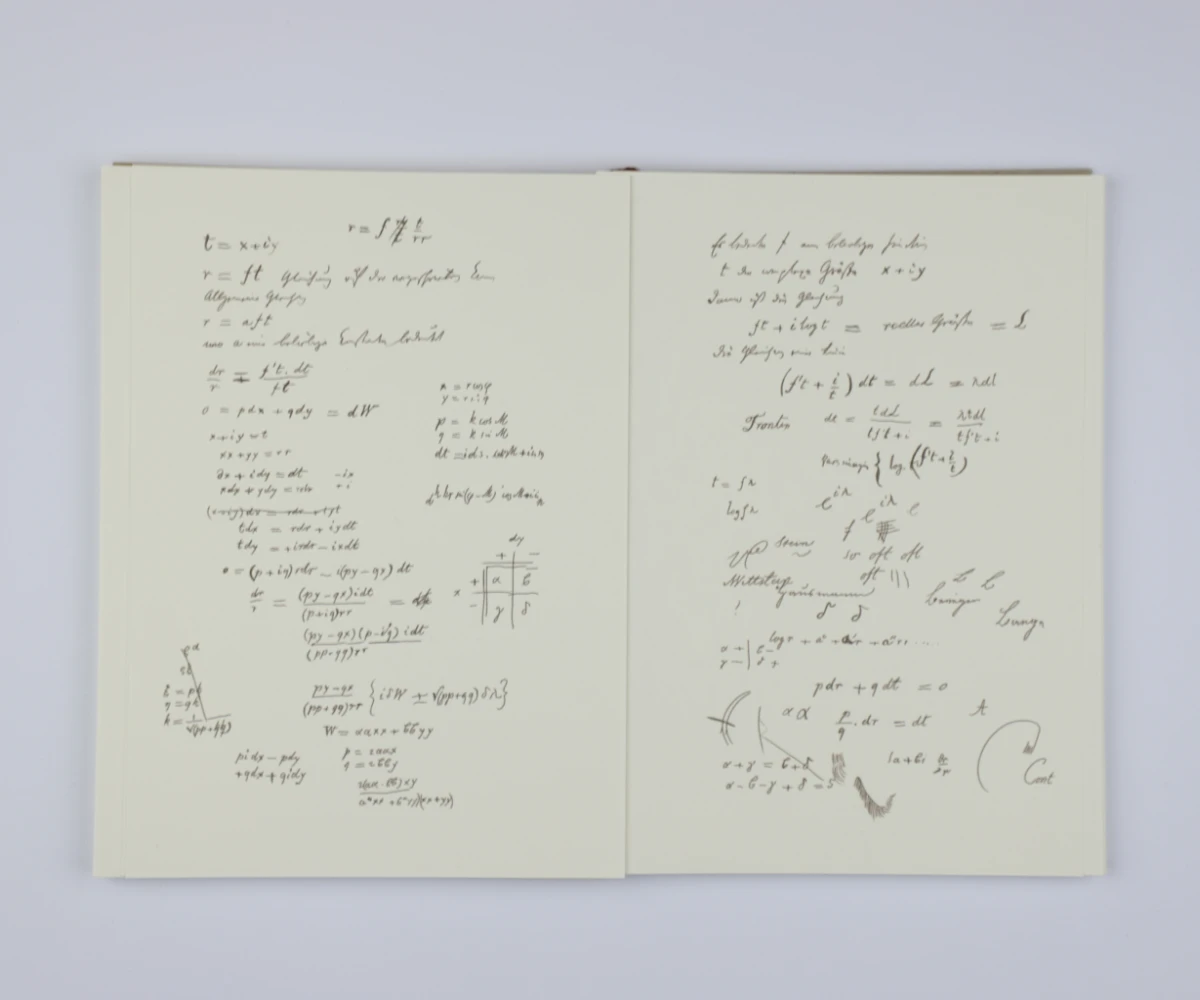
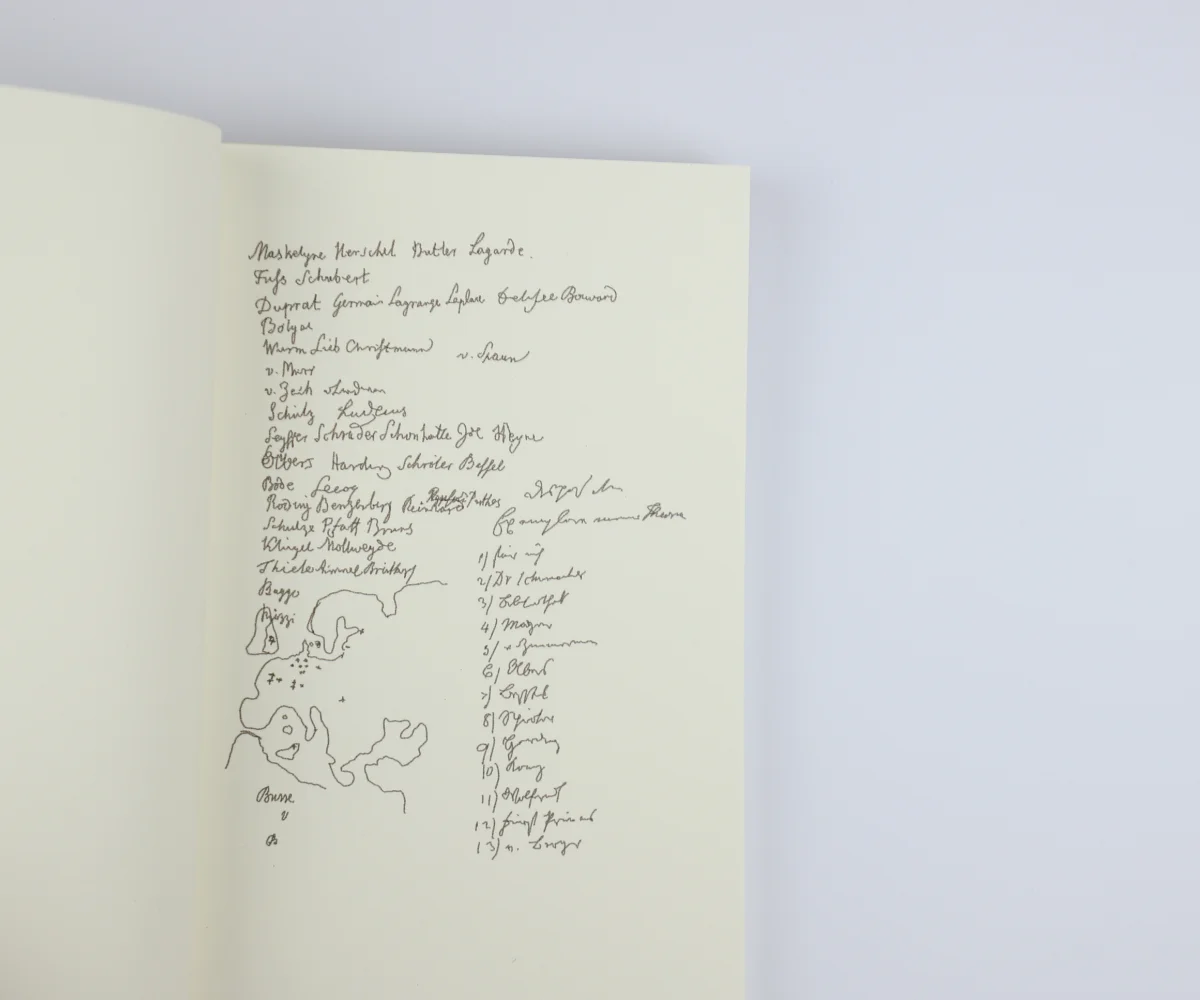
Carl Friedrich Gauss kept private notebooks throughout his career, filling them with discoveries he never published. These manuscripts, preserved at the University of Göttingen, contain some of the most remarkable unpublished mathematics in history. This edition brings five notebooks together in a single handmade volume, with every page vectorized by hand from the original scans.
What Makes This Edition Unique
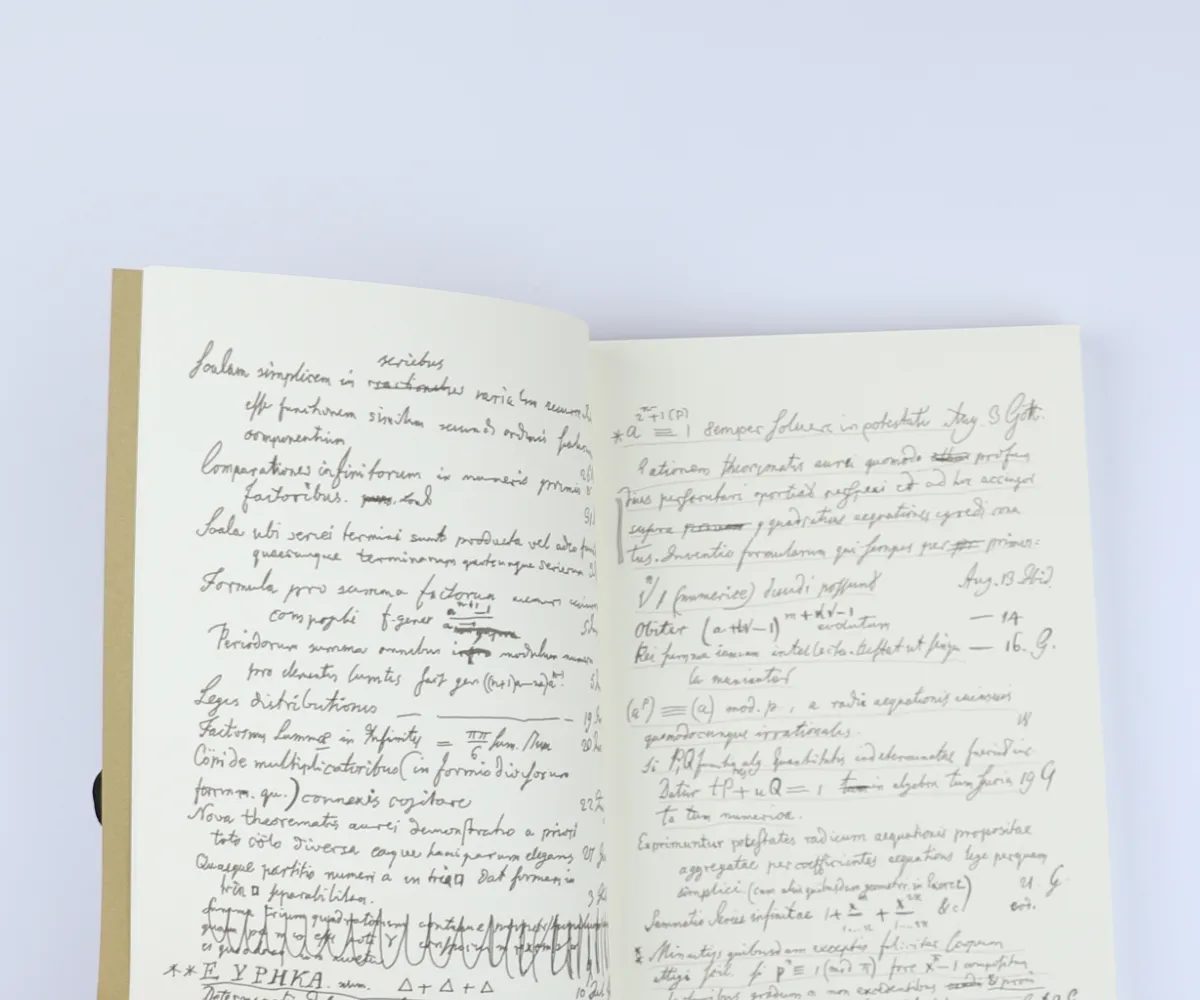
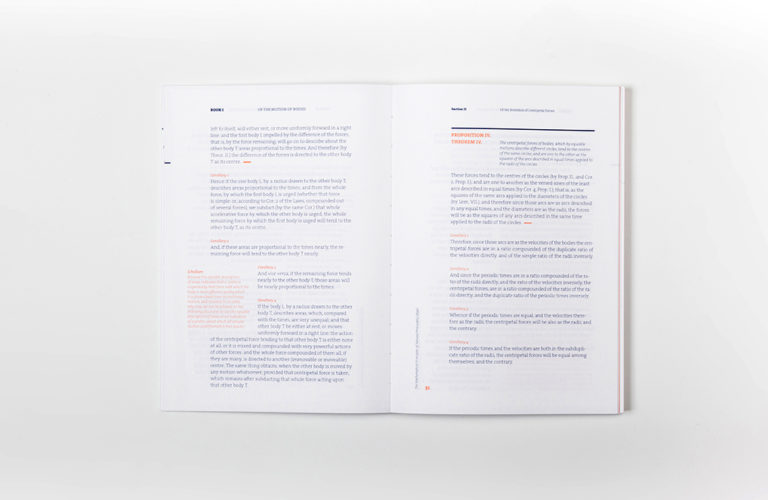
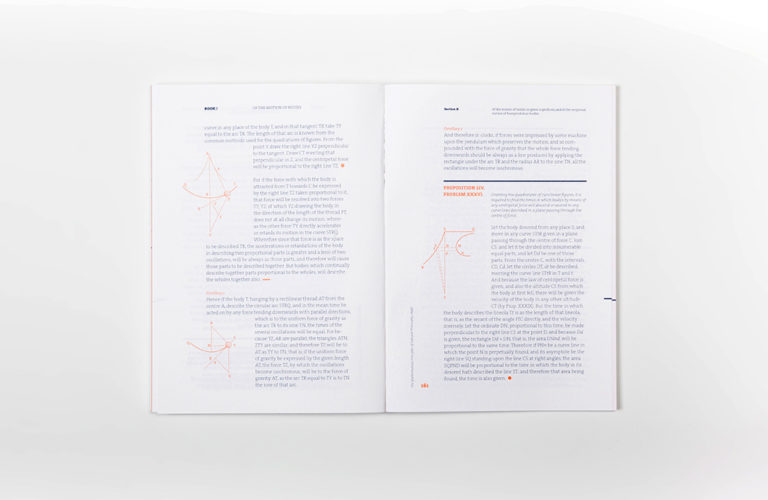
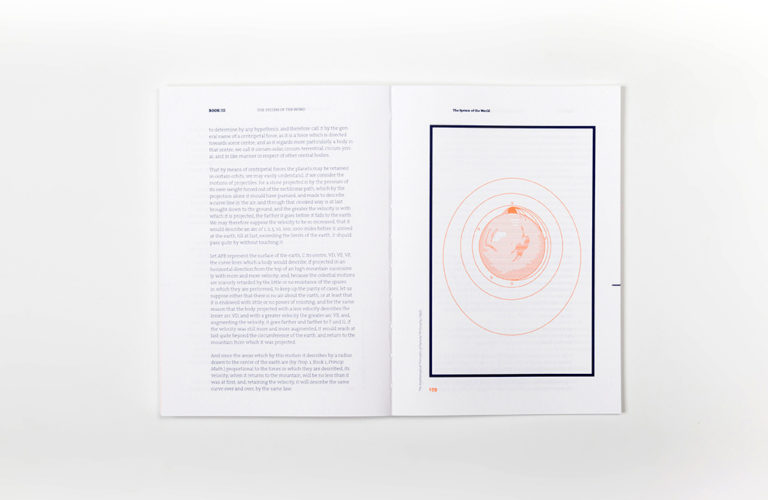
- Hand-vectorized, not scanned: Every word, symbol, diagram, and correction has been redrawn digitally, line by line, preserving Gauss's handwriting while achieving perfect print clarity. Zero pixels from the original scans remain. This is an entirely new artwork
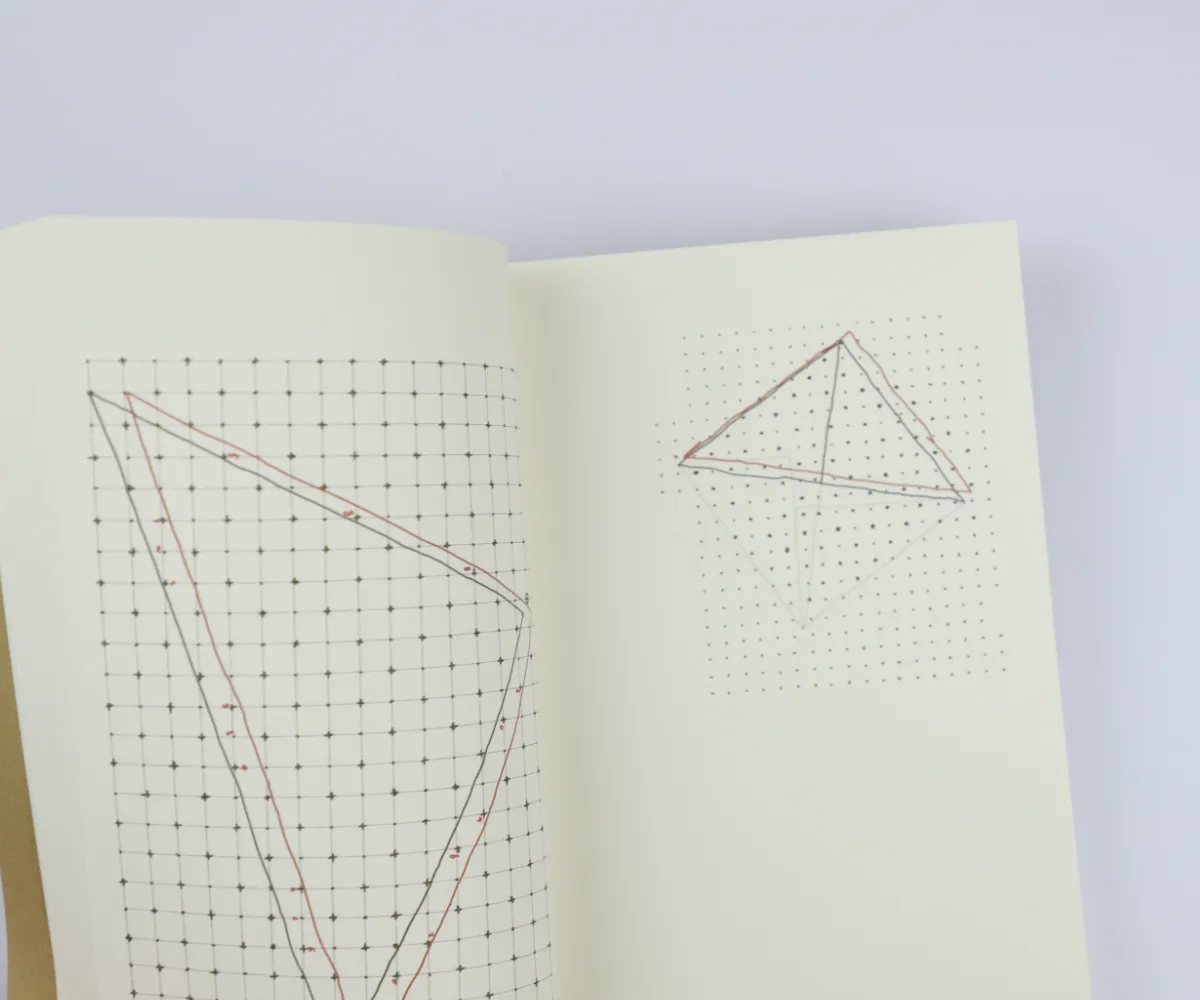
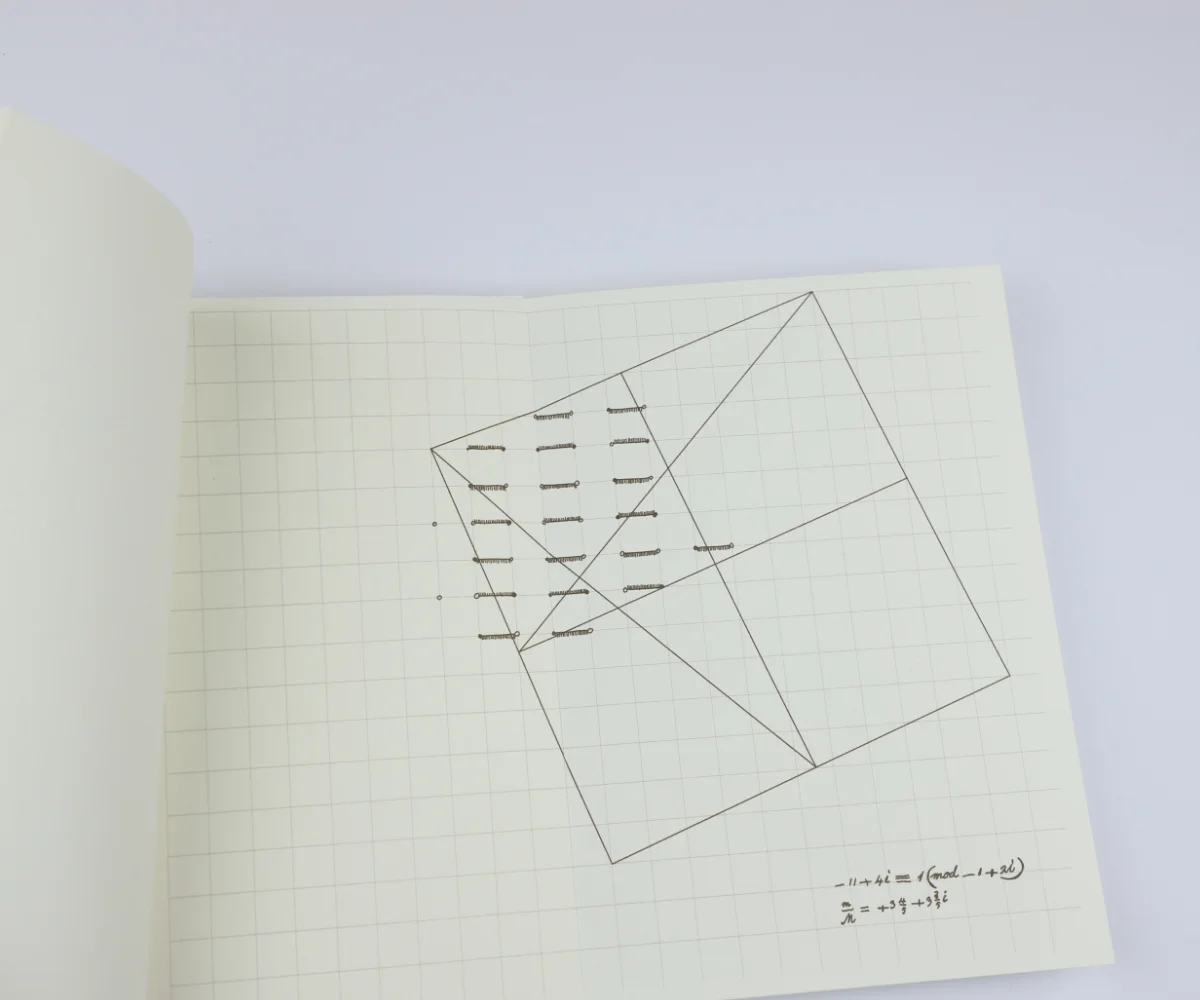
- Foldable A4 pages: Some of Gauss's original manuscripts were drawn on large sheets. These pages are included as foldable A4 inserts within the A5 format, unfolding to reveal full-size geodesic networks and geometric constructions
- Japanese stab binding: Hand-sewn with waxed linen thread through kraft cardboard covers
- Made to order: Each copy is printed, bound, and numbered individually. No two copies are identical
The Five Notebooks
- Mathematisches Tagebuch (1796–1814): Gauss's legendary mathematical diary, including the famous EUREKA entry where the 19-year-old Gauss discovered that every positive integer is the sum of three triangular numbers
- Zeichnungen: Geodesic survey networks and diagrams on the biquadratic residues. Geometric drawings in black and red ink that look like contemporary art
- Nichteuklidische Geometrie: Gauss's unpublished explorations of non-Euclidean geometry, decades before Bolyai and Lobachevsky published their own
- Theorie der krummen Flächen: Curved surface theory, including work related to the Theorema Egregium, one of the most beautiful results in differential geometry
- Geometria situs: Early explorations of topology, with knot diagrams and spatial reasoning that anticipate 20th-century mathematics
Consult the Originals
The original manuscripts are digitized by the Göttingen Digitisation Centre (GDZ) at the University of Göttingen. Our edition is produced with their permission. You can view the Mathematical Diary at the GDZ digital library. Our vectorized edition transforms these faded, difficult-to-read scans into crisp, printable artwork.
Who This Book Is For
- Mathematics students and researchers fascinated by the history of mathematics
- Book collectors and bibliophiles seeking unique handmade editions
- Fans of Gauss looking for more than a biography — the actual manuscripts
- Anyone who sees beauty in handwritten mathematical notation
- Gift buyers looking for something truly one-of-a-kind for a mathematician
Frequently Asked Questions
Are these Gauss's actual handwritten pages?
This edition is based on the original manuscripts held at the University of Göttingen, digitized by the GDZ. Every page has been vectorized by hand. Meaning each word, symbol, and diagram was redrawn digitally from the original scans. The result preserves Gauss's handwriting with perfect print clarity, but no pixels from the original scans appear in the final book.
What does "vectorized" mean?
Vectorization means tracing every element of the manuscript by hand using a digital pen. Unlike a photocopy or scan, a vectorized page can be printed at any size with perfect sharpness. It is the same technique used in our Alan Turing edition. The process takes weeks of careful work.
What is the EUREKA entry?
On July 10, 1796, the 19-year-old Gauss wrote "ΕΥΡΗΚΑ! num = Δ + Δ + Δ" in his diary. He had just proved that every positive integer is the sum of three triangular numbers. This entry, echoing Archimedes's famous exclamation, is one of the most celebrated moments in the history of mathematics. It appears in this book.
What are the foldable pages?
Some of Gauss's original manuscripts were drawn on larger paper. Rather than shrink them to fit A5, we included them as foldable A4 inserts that you can unfold to see the full-size drawings — geodesic networks and geometric constructions at their original scale. The Japanese stab binding makes this possible because the spine is not glued.
How long does production take?
Each copy is printed and hand-bound individually. Please allow approximately 5 business days for production before shipping, depending on daily orders. The Japanese stab binding alone takes 30–40 minutes per copy.
Specifications
- Format: A5 (148 x 210 mm) with foldable A4 inserts
- Pages: +150
- Cover: Kraft cardboard 250g with Gauss's signature
- Interior paper: Bamboo cream 120g
- Binding: Japanese stab binding (hand-sewn with waxed linen thread)
- Production: Handmade, numbered copies. Made to order
- Production time: 5 business days (approximately, depending on daily orders)

 No products in the cart.