
Relativity: The Special and General Theory
20€
Out of stock
Description
Only 90 copies of "Relativity: the Special and General Theory", the 1920 English edition have been printed this 2021.
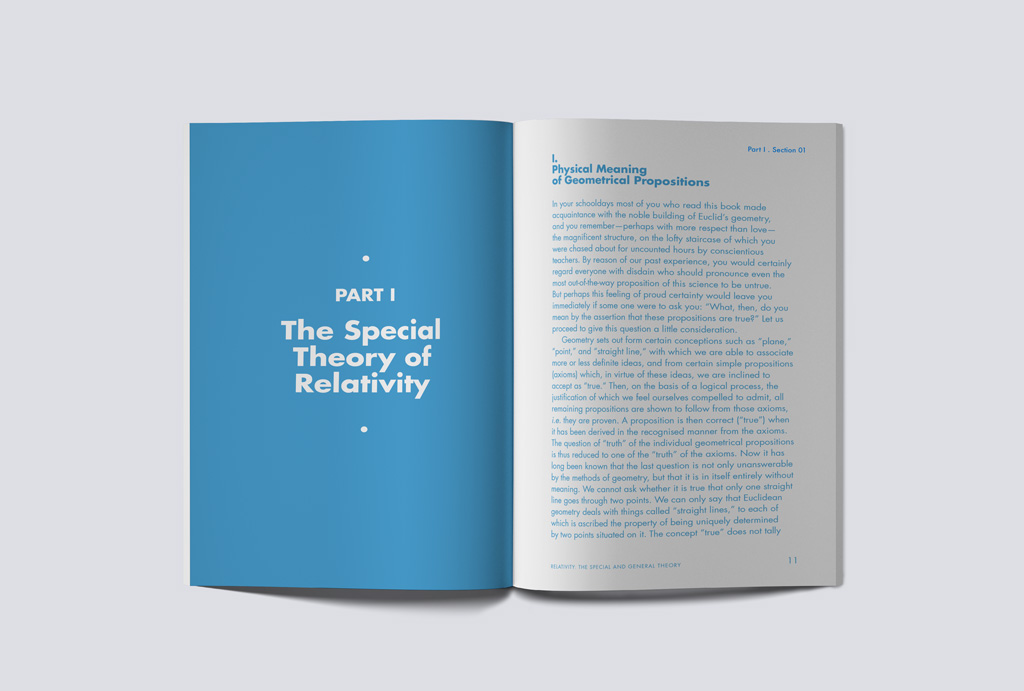
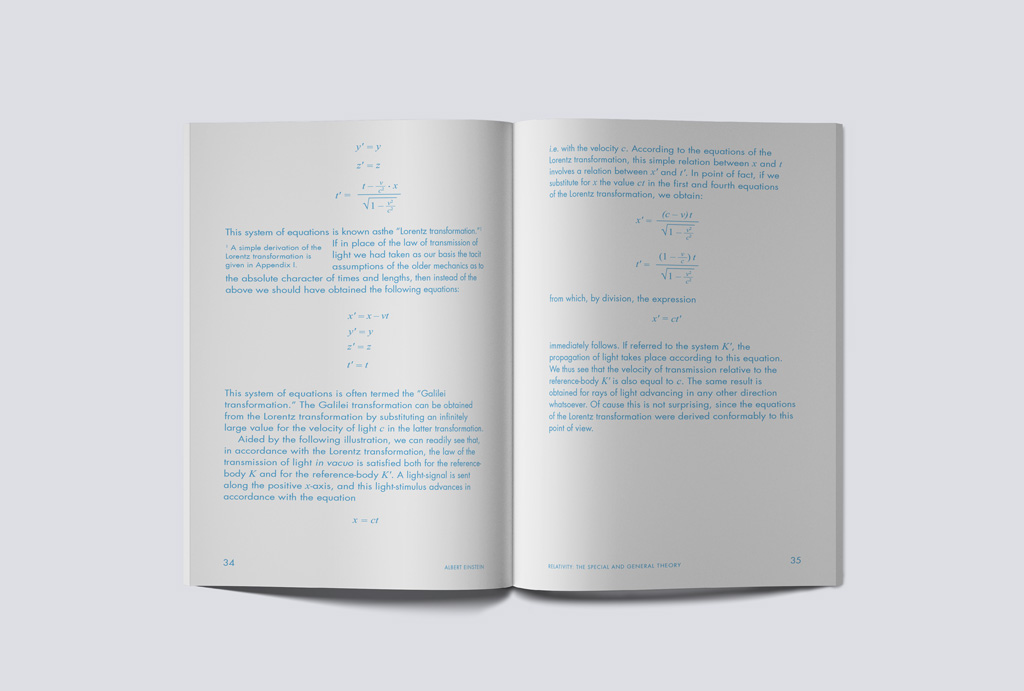
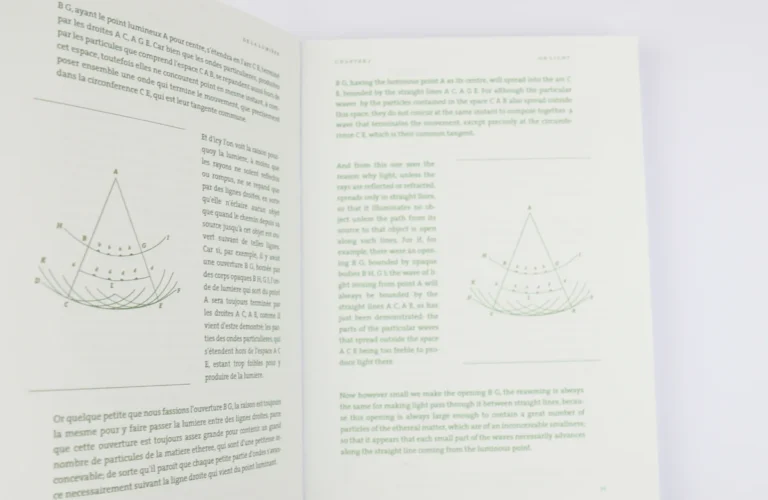
We designed a small, A5 format book (148.5 x 210 mm - 5.8 x 8.3 inches), of about 100 pages, with a neat, modern design.
--
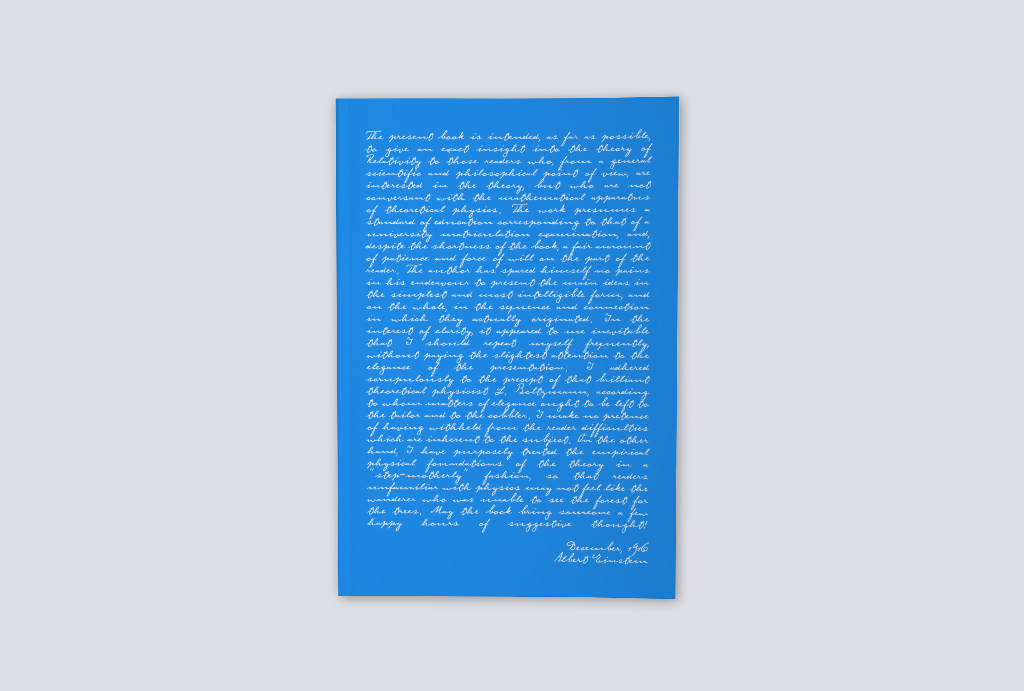
The cover consists of the preface that Einstein wrote using a digitalized version of his own calligraphy.
"In a joined effort, creators Harald Geisler and Elizabeth Waterhouse, spend over 7 years on finalising the project. It was made possible with the help of the Albert Einstein Archive, the Albert Einstein Estate, and funding by a successful Kickstarter Campaign of 2,334 backers.
The outcome was worth the effort: a font unprecedented in aesthetic technique and a benchmark for handwriting fonts."
https://www.myfonts.com/fonts/harald-geisler/albert-einstein/
--
Albert Einstein's Relativity: The Special and General Theory is one of the most pivotal works in the field of physics. In this beautiful book, Einstein presents his revolutionary ideas that challenged conventional notions of time, space, and gravity. This comprehensive guide not only explains the fundamental principles of relativity but also makes complex concepts accessible to a broader audience. The book has since become a cornerstone in understanding modern physics and has profoundly influenced various scientific disciplines.
At the heart of Einstein’s theory of relativity are two key concepts: special relativity and general relativity. Special relativity, introduced in 1905, revolutionized the understanding of motion and the speed of light. It posits that the laws of physics remain constant for all observers, regardless of their relative motion. One of its most famous implications is the equation E=mc², which demonstrates the equivalence of mass and energy. This insight laid the groundwork for numerous advancements, including nuclear energy and cosmology.
General relativity, on the other hand, expanded upon these ideas by incorporating the effects of gravity into the framework of relativity. Einstein proposed that gravity is not a force but rather the curvature of spacetime caused by mass. This revolutionary perspective changed how scientists perceive the universe, offering explanations for phenomena such as the bending of light around massive objects and the precession of planetary orbits. General relativity has been confirmed through numerous experiments and observations, solidifying its place as one of the pillars of modern physics.
Einstein's Relativity: The Special and General Theory not only offers insights into theoretical physics but also reflects his deep philosophical inquiries into the nature of reality. Throughout the book, Einstein emphasizes the importance of thought experiments and the role of imagination in scientific discovery. His ability to distill complex ideas into clear, understandable language makes this work accessible to both scientists and lay readers alike. The book serves as an essential resource for anyone looking to grasp the foundational concepts of relativity and its implications for our understanding of the universe.




















 No products in the cart.